MIT Unveils Virtual Violin That Simulates Acoustic Physics to Aid Luthiers
Breaking: MIT Engineers Build Virtual Violin to Revolutionize Luthier Design
CAMBRIDGE, MA – MIT researchers have developed a computer simulation that accurately models the physics of a violin and reproduces the sound of a plucked string, offering luthiers a powerful new design tool that could transform instrument making.
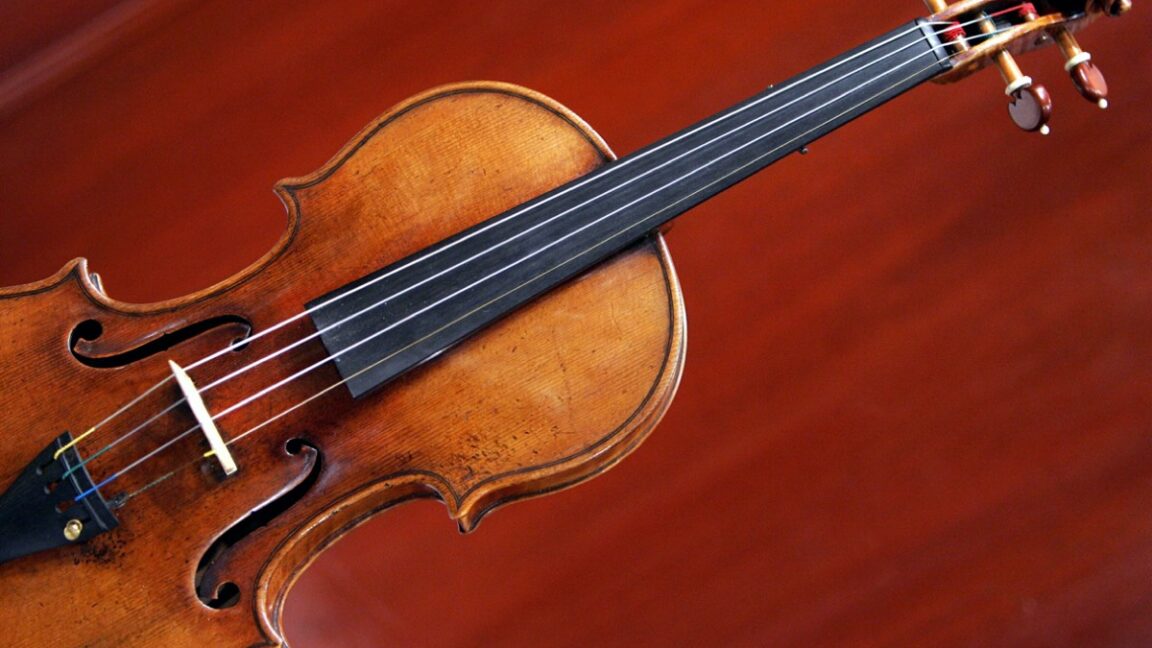
The virtual violin, described in a paper published today in npj Acoustics, captures the precise mechanics of the instrument. Unlike common sampling-based software that averages thousands of recorded notes, this model builds sound from fundamental physical principles.
“We’re not saying that we can reproduce the artisan’s magic,” said co-author Nicholas Makris, a professor of mechanical and ocean engineering at MIT. “We’re just trying to understand the physics of violin sound, and perhaps help luthiers in the design process.”
Background
Violin making, or lutherie, has traditionally relied on hands-on experience. Luthiers craft parts and select materials to shape an instrument’s final sound through trial and error.
The acoustics of violins—especially those from the “Golden Age” of Stradivari, Amati, and Guarneri—have long puzzled scientists. Researchers have sought to unlock the secrets behind their superior sound, but the instrument’s acoustic complexity presents many variables.
Standard software simulations often use sampling, which averages the final sound from thousands of notes. This approach can obscure the fine details that distinguish one violin from another.
How the Virtual Violin Works
The MIT simulation is built on the fundamental physics of string vibration, soundboard resonance, and air cavity coupling. It can reproduce a realistic sound of a plucked string, allowing luthiers to test design changes without building physical prototypes.
“This tool could streamline the painstaking process of crafting a violin,” Makris explained. “It provides a virtual laboratory where luthiers can experiment with materials and shapes before committing to wood and varnish.”
What This Means
For luthiers, the virtual violin offers a way to accelerate design iteration. Instead of carving dozens of instruments to test a single variable, a maker can tweak parameters—such as plate thickness or wood density—and hear the immediate effect.
The tool may also help demystify why certain historical instruments sound exceptional. By simulating the geometries and materials of Stradivari violins, researchers could identify key acoustic features.
“We’re building a bridge between art and science,” said Makris. “Luthiers have an intuitive understanding of their craft. This simulation gives them a quantitative companion.”
Expert Reaction
Acoustician Dr. Emily Carter of the University of Cambridge, who was not involved in the study, called the work “a significant step forward.” She noted that “previous simulations either oversimplified the physics or relied on brute-force sampling. MIT’s approach is elegantly grounded in first principles.”
Prominent luthier Giovanni Rossi, based in Cremona, Italy, expressed cautious optimism. “This could become a valuable teaching tool for apprentices,” he said. “But I don’t think it will replace the ear of a master.”
Next Steps
The MIT team plans to extend the simulation to include bowed sounds, not just plucked strings. They also aim to create an open-source version that luthiers can customize.
“We’re at an early stage,” Makris cautioned. “But even now, the virtual violin shows us how small changes—like adjusting the soundpost position—affect tone in ways that are hard to measure by ear.”
Related Discussions