5 Essential Facts About GitHub Copilot CLI: Interactive vs. Non-Interactive Modes
Welcome to this beginner-friendly guide on GitHub Copilot CLI! If you're diving into command-line coding with an AI assistant, understanding the two primary modes—interactive and non-interactive—is crucial. This article breaks down what each mode offers, how to use them, and when to pick one over the other. By the end, you'll navigate your terminal like a pro, whether you're exploring a new project or need a quick answer. Let's get started!
1. What Is GitHub Copilot CLI?
GitHub Copilot CLI brings the power of AI directly into your terminal. It’s a command-line tool that helps you generate code, understand repositories, and automate tasks without leaving your shell. The tool operates in two distinct modes: interactive and non-interactive. The interactive mode defaults when you run copilot, creating a chat-like session where you can ask follow-up questions. In contrast, non-interactive mode uses the -p flag for one-shot prompts, ideal for quick tasks. Both modes access your project files and can run commands on your behalf, but they serve different workflows.
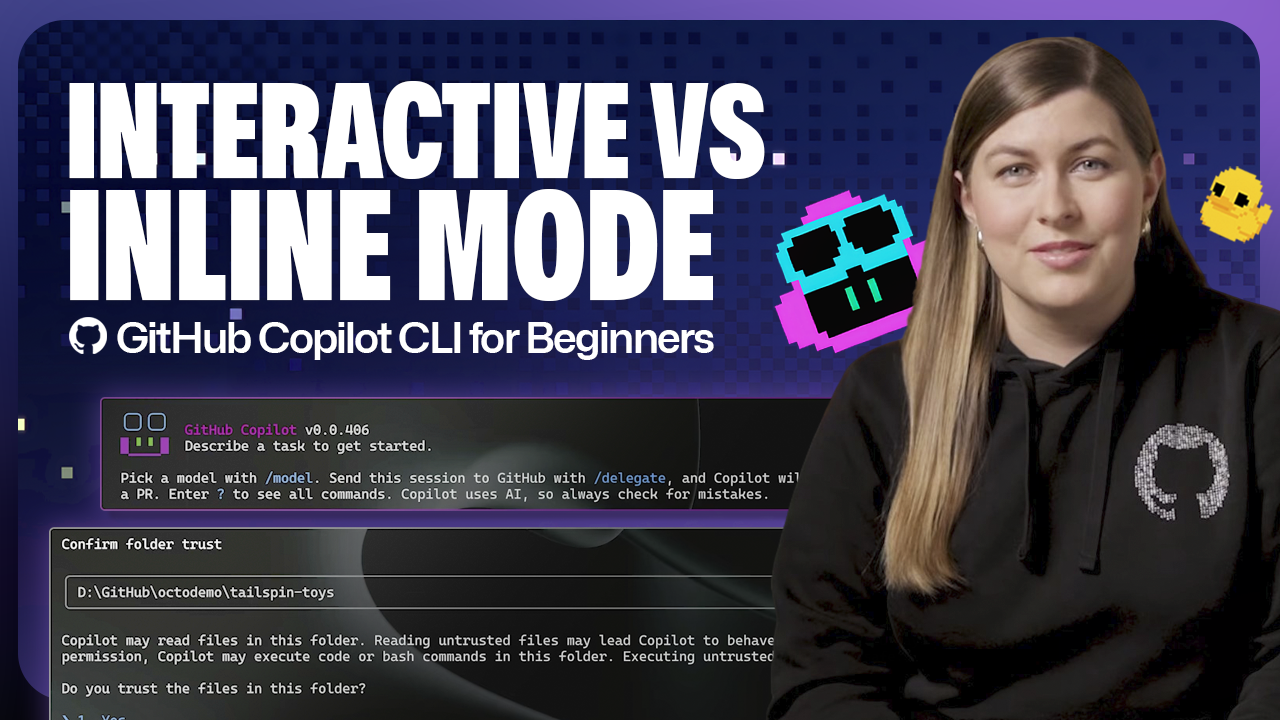
2. Interactive Mode: Your Conversational Coding Partner
Interactive mode is designed for collaboration and iteration. When you launch Copilot CLI without any flags, you enter a session where you can ask a question, review the response, and then ask more questions—all in one continuous conversation. This mode is perfect for exploratory tasks like understanding a new project, debugging complex issues, or generating step-by-step instructions. To start, simply type copilot at the command line and press Enter. The tool may ask for permission to read your folder; grant it to enable full file access. Then, ask something like, "How do I run this project locally?" Copilot provides instructions, but you can also request, "Can you run it for me?" to let Copilot execute the command. The session persists until you exit, allowing you to refine your queries and see changes in real time.
3. Non-Interactive Mode: Quick Answers at Your Fingertips
Non-interactive mode is built for speed and simplicity. Instead of a session, you provide a single prompt directly in the command line and receive an immediate response. This mode is ideal for one-off requests such as summarizing a repository, generating a code snippet, or integrating into automated scripts. To use it, ensure you are not inside a Copilot session (type exit if needed). Then, run copilot -p "Quickly summarize what this repository does and the key folders." Copilot analyzes your project and returns a brief answer, then you’re back to your normal terminal prompt. There’s no follow-up or context retention, making it perfect for quick, focused tasks where you already know exactly what you need.

4. Key Differences Between Interactive and Non-Interactive
The primary difference lies in context and continuity. Interactive mode maintains a session, allowing multi-turn conversations and the ability to review and modify previous outputs. It’s best for deep, investigative work where you might not know the exact question initially. Non-interactive mode is stateless—each prompt is independent. It’s faster because you skip the session overhead, but you lose the ability to ask follow-ups. Another difference is entry method: interactive via copilot, non-interactive via copilot -p. Both can execute commands on your system, but only interactive mode lets you collaborate on the same task across multiple prompts. Choose interactive when you want to learn or troubleshoot; choose non-interactive when you need a quick answer or want to incorporate Copilot into a script.
5. Tips for Switching Between Modes Seamlessly
To get the most out of GitHub Copilot CLI, master the transition between modes. If you’re in an interactive session and need a quick one-off answer, you can exit with exit and then run a non-interactive prompt. Alternatively, you can open a new terminal window for non-interactive use while keeping an interactive session alive. Remember that trust permissions apply per folder: if you grant access in interactive mode, non-interactive commands may still need confirmation. For automated workflows, non-interactive mode is ideal because it doesn’t require user interaction. A practical tip: start with non-interactive to get a fast summary, then switch to interactive if you need to dig deeper. This combination saves time and lets you leverage both modes’ strengths.
By understanding these two modes, you’ll be able to tackle a wide range of projects efficiently. Whether you’re exploring a complex codebase or need a quick snippet, GitHub Copilot CLI has a mode that fits your workflow. Experiment with both, and soon you’ll wonder how you ever coded without them!
Related Discussions