Convicted Fraudster Trevor Milton Targets Tesla Semi Economics – Experts Say Some Critiques Hold Water
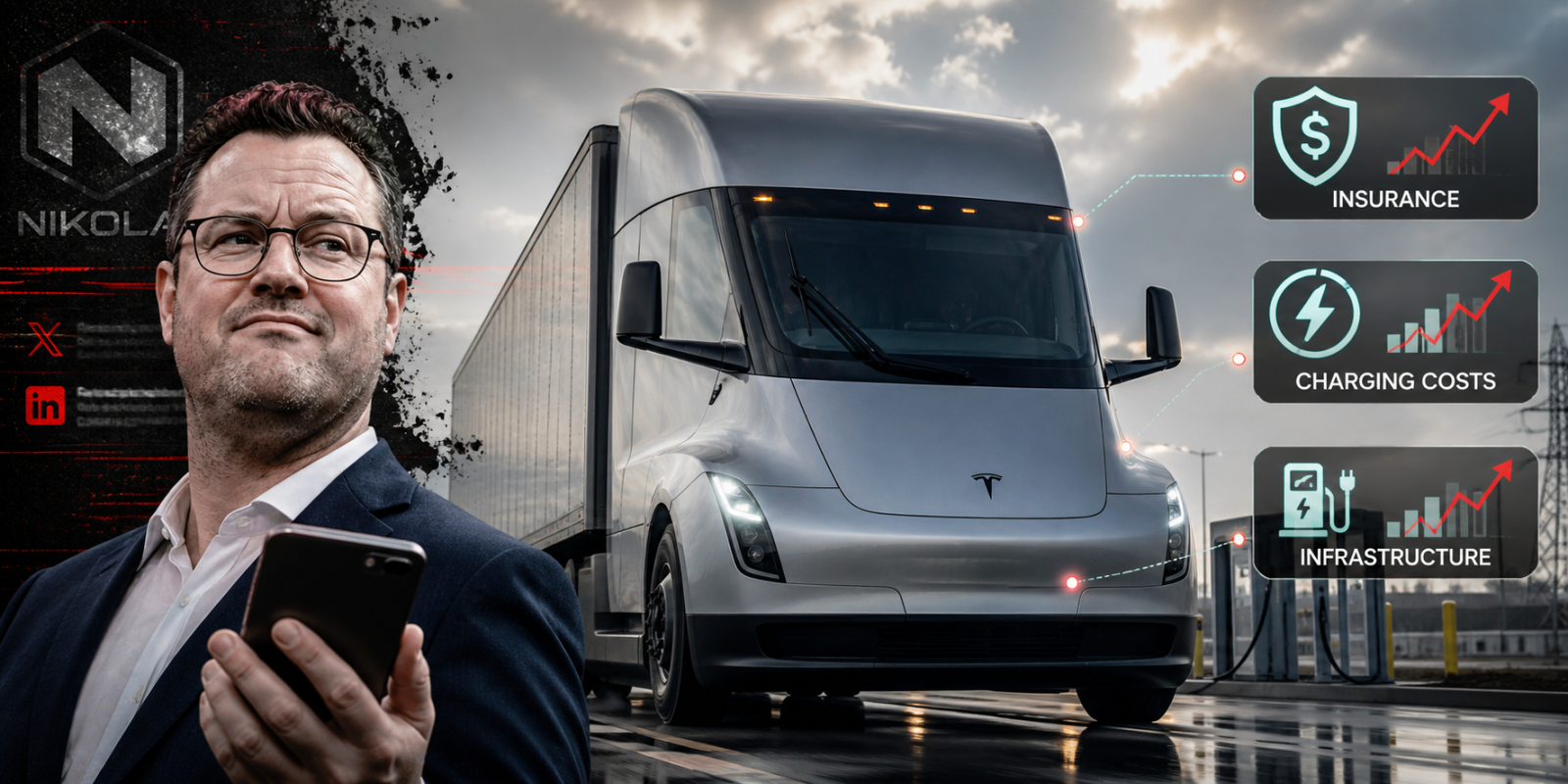
Trevor Milton, the convicted fraudster and founder of Nikola Motors, launched a blistering LinkedIn attack on Tesla Semi's economics Wednesday that, despite his near-total lack of credibility, contains several points that industry analysts say are worth examining.
Milton, sentenced to four years in prison for lying to investors about Nikola's electric truck technology, wrote a lengthy comment on a post about Tesla ramping Semi production, claiming he 'knows EV trucking probably better than anyone.' His post broke down what he calls the 'unrealistic assumptions' behind Tesla's cost projections.
While Milton's credibility is shattered by his fraud conviction, some of his technical arguments are 'not entirely baseless,' said Dr. Emily Tran, a transportation economist at UC Davis who studies EV adoption.
'He correctly points out that battery costs remain the single largest hurdle, and that Tesla's claimed total cost of ownership might rely on ideal conditions,' Tran added. 'But his tone and track record make him an unreliable messenger.'
Key Points in Milton's Critique
Milton argued that Tesla's Semi battery pack − expected around 800 kWh for the longest-range version − would cost $120,000–$150,000 at current prices, eating into profitability. He also questioned whether charging infrastructure can support fleets of electric semis at scale.
Tommy Sawyer, a senior analyst at Clean Transport Research, noted: 'The charging issue is real. We've seen it with electric buses. Peak demand from a depot of 50 Semis could overwhelm local grids.'
Sawyer continued: 'But Milton conveniently ignores that Tesla has its own Megachargers and can pair them with on-site battery storage. That part of his argument falls flat.'
Milton also claimed that range degradation in cold climates could make the Semi unreliable for long-haul routes. Tesla has not published cold‑weather testing data, leaving room for speculation.
Background: From Nikola Founder to Convicted Felon
Milton founded Nikola Corporation in 2014, promising a hydrogen fuel-cell truck that could rival Tesla. In 2020, short‑seller Hindenburg Research exposed alleged fraud, leading to SEC charges. Milton was convicted in 2022 of two counts of securities fraud and one count of wire fraud for lying about Nikola's prototypes and production readiness.
Prosecutors argued that Milton's lies cost investors billions. He is currently out on appeal but remains a pariah in the EV industry. Nikola itself has struggled to pivot to battery-electric trucks and recently diluted shareholders.
Despite his fall, Milton still commands a following on social media, where he regularly posts about EV trucking.
What This Means for Tesla Semi
Tesla has touted the Semi as a game‑changer for freight, with early customers like PepsiCo and UPS reporting positive results. However, Milton's critique − even from a discredited source − echoes broader industry skepticism about the pace of electric truck adoption.
Maria Lopez, fleet manager at a regional carrier testing the Semi, said: 'We love the truck's performance, but charging infrastructure is indeed a bottleneck. Milton might not be credible, but his points about depot charging rings true for us.'
The Wall Street view remains mixed. Shares of Tesla moved little on the post, but analysts will watch for any production delays. Tesla has not responded to Milton's LinkedIn post.
Ultimately, the episode illustrates a strange truth: even a convicted fraudster can sometimes ask the right questions. But as Sawyer put it, 'When a man who lied about his own truck criticizes a competitor, you take everything with a bucket of salt.'
Related Discussions